
Russian frigate fires flares toward Danish helicopter
A Russian warship fired two flares at a Danish military helicopter over international waters near Gedser. One passed close; nobody was hurt. Denmark has summoned Russia's ambassador, and Moscow has said nothing — leaving the Danish account as the only account.
Quick summary
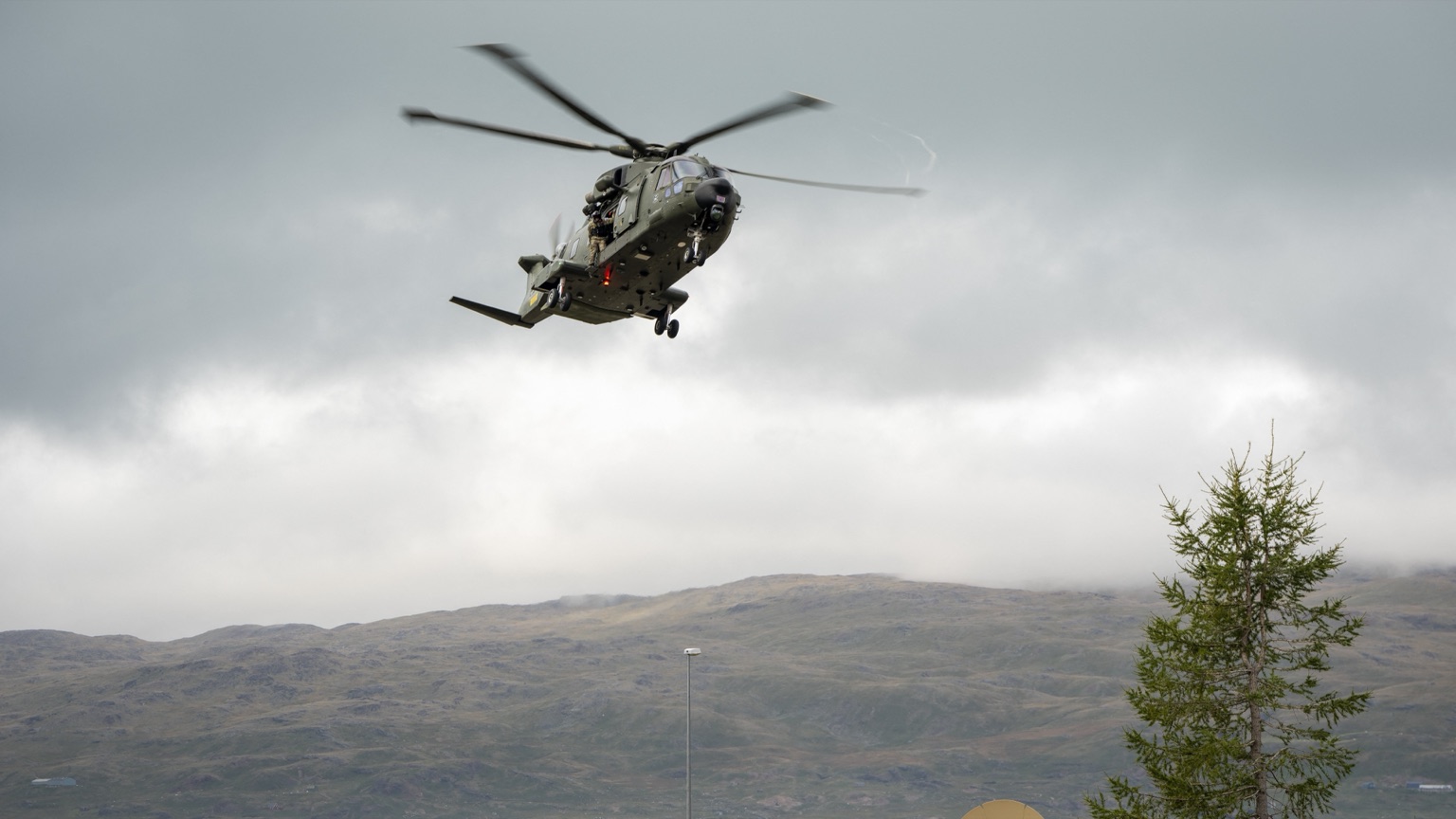
On September 14 a Russian frigate fired two flares toward a Danish military helicopter flying over international waters near Gedser, in the Baltic Sea. The helicopter was photographing the Russian vessel during what Denmark describes as a routine mission. One of the flares passed close to the aircraft. No crew member was injured and the helicopter was not damaged.
Denmark's Defence Command confirmed the encounter on September 15 and Copenhagen summoned Russia's ambassador the same day. Danish officials describe the incident as serious and as the first of its kind involving Denmark.
Russia has not commented publicly or offered a competing account, so everything currently on the record comes from one side. The Russian vessel has not been publicly identified, and no independent imagery of the encounter has surfaced. Coverage that has appeared since divides less on the facts — which are not in dispute — than on what to call them: an “attack,” or a warship that “fired flares toward” an aircraft.
Key points
- The incident took place on September 14 near Gedser, in international waters in the Baltic Sea.
- A Danish military helicopter was photographing a Russian frigate during a routine mission when the frigate fired two flares toward it.
- One flare passed close to the aircraft. No crew were injured and the helicopter was not damaged.
- Denmark summoned Russia's ambassador in Copenhagen on September 15 and called the incident the first of its kind involving Denmark.
- The Russian vessel has not been publicly identified, and Russia has offered no account of its own.
- Coverage splits on language rather than facts: some outlets call it an attack, others describe flares fired toward the aircraft.
How it unfolded
- New
The encounter
A Russian frigate fires two flares toward a Danish military helicopter over international waters near Gedser. One passes close to the aircraft.
- New
First reports
Danish outlet Ekstra Bladet breaks the story. Denmark's Defence Command issues an official statement later the same day.
- New
Denmark confirms the incident
Danish officials publicly confirm the account and describe the encounter as serious and unprecedented for Denmark.
- New
Russia's ambassador is summoned
Copenhagen summons the Russian ambassador — the first formal diplomatic step.
- ChangedContested
International coverage picks it up
Reuters, AP and other international outlets carry the story, and the framing begins to diverge from the Danish statement it is all sourced to.
- New
Russia has not responded
No public comment or competing account from Moscow, which leaves the Danish version as the sole source for every report so far.
Claim tracker
4 confirmed · 1 contested · 1 unverified
- ConfirmedKey claim
A Russian frigate fired two flares toward a Danish military helicopter near Gedser on September 14.
- ConfirmedKey claim
One flare passed close to the aircraft; no crew were injured and the helicopter was not damaged.
- ConfirmedKey claim
Denmark summoned Russia's ambassador following the incident.
- ContestedKey claim
The incident is part of a wider Russian hybrid-warfare campaign against NATO states.
Danish officials and much European security coverage place it in that pattern. It is an interpretation that reaches well beyond what this single encounter establishes, and the incident alone cannot settle it either way.
- Confirmed
This is the first incident of its kind involving Denmark.
Confirmed as a Danish official characterisation rather than as an independently checked historical claim.
- Unverified
The Russian vessel involved has been identified.
No name or hull number has been made public by either side.
Coverage analysis
How different outlets framed the same event, and where their accounts agree and diverge — as it stood when this brief was published.
Reuters, AP and Bloomberg — the incident. Largely confined to the immediate facts: flares fired, helicopter unharmed, ambassador summoned.
Danish officials and European security coverage — Russian provocation. The encounter read against wider Baltic tensions and sustained Russian pressure on NATO's northern flank.
Pro-Ukraine coverage — a pattern of aggression. The incident as one entry in a running list of Russian hybrid activity rather than as an event in its own right.
Aviation and defence outlets — the near miss. Most attention on how close the flare came and what that means operationally for crews flying these missions.
The sharpest difference is not which frame an outlet picks but which verb it uses. Some coverage calls this an “attack”; other coverage says a frigate “fired flares toward” a helicopter. Both descriptions are sourced to the same Danish statement, and the gap between them is doing most of the work in how the story reads.
Worth holding onto while reading any of it: every report so far traces back to one government's account of an encounter with no independent imagery and no Russian version.
What we still don't know
- Which Russian frigate was involved, and whether either side will name it.
- Why the flares were fired — warning, deterrence, or something unintended.
- Whether Russia disputes the Danish account, or stays silent.
- Whether video, imagery or radar data from the encounter is ever released.
- Whether this was an isolated confrontation or part of a documented pattern in the Baltic.
- What Denmark does next if the ambassador's summons produces no response.