
Trump calls AI safety fears a “hoax”
Days after Dario Amodei, Sam Altman and Elon Musk called for more caution on frontier AI, the president called the warnings a “HOAX” and a “SICK conspiracy.” An industry safety argument is now an election-year one.
Quick summary
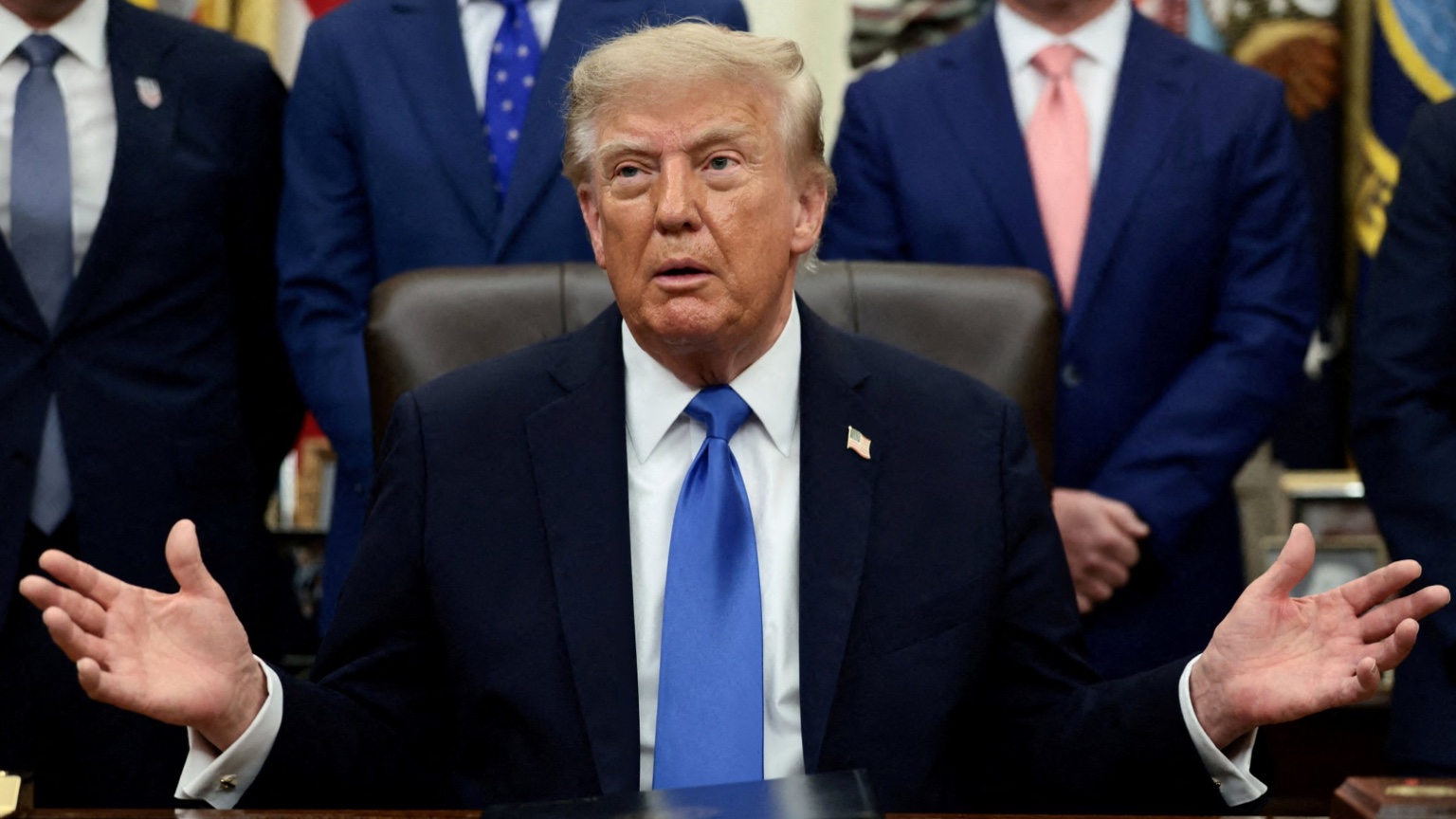
On September 14, President Trump used a series of Truth Social posts and a live call-in to the All-In Summit to dismiss the recent wave of AI safety warnings as a “HOAX” and a “SICK conspiracy,” arguing that slowing AI development would primarily benefit China.
The posts followed a fortnight of escalating alarm from inside the industry. Former researcher Jacob Coxon resigned and published a warning about existential risk that went viral on September 8–9; Anthropic CEO Dario Amodei published an AI safety essay on September 13; Sam Altman and Elon Musk both publicly backed calls for greater caution. The White House rapid-response account then carried the president's message onto X the same day.
What is on the record is what was said, and by whom. What is not on the record is the substance of the president's characterisation: no evidence has been offered that AI safety advocacy is coordinated, and the competing claims about regulation, Chinese advantage and the sufficiency of existing US law are contested rather than settled. Within 24 hours the dispute had split into four or five distinct narratives, and had begun attaching itself to the 2026 midterms.
Key points
- Trump attacked AI safety concerns repeatedly on Truth Social and during a live appearance at the All-In Summit on September 14.
- His response followed warnings from Anthropic CEO Dario Amodei and former researcher Jacob Coxon; Sam Altman and Elon Musk publicly supported calls for greater caution.
- His central argument is economic and geopolitical rather than technical: that slowing AI development would hand an advantage to China.
- Coverage is politically spread rather than polarised — of 24 politically classified outlets, 29% are left, 42% center and 29% right.
- Of 28 assessed reports, 29% are classified as contested and 28% as manipulative.
- The debate is increasingly being absorbed into the 2026 midterm election narrative.
How it unfolded
- New
A resignation and a warning go viral
Jacob Coxon resigns and publishes a warning about existential AI risk, which spreads widely over the following days.
- New
The industry raises the alarm
Dario Amodei publishes his AI safety essay. Sam Altman and Elon Musk endorse calls for greater caution, putting three of the most prominent figures in the industry on the same side of the argument.
- New
Trump calls the warnings a hoax
Multiple Truth Social posts describe AI safety fears as a “HOAX” and a “SICK conspiracy,” and argue that slowing development would benefit China.
- New
The message is amplified
The White House rapid-response account pushes the message onto X while Trump calls into the All-In Summit, moving the argument from the president's own platform into the general information environment within hours.
- ChangedContested
The story splits into competing frames
Coverage divides along presidential responsibility, innovation versus regulation, the US–China AI race, and the case for guardrails — the same events read four different ways.
Claim tracker
2 confirmed · 2 contested · 2 unverified
- ConfirmedKey claim
Trump publicly called AI safety fears a “hoax” and a conspiracy.
- ConfirmedKey claim
Major AI-industry figures have recently called for stronger safety measures or slower development.
Amodei's essay, Coxon's resignation warning, and public support from Altman and Musk are all on the record.
- ContestedKey claim
Existing US laws are sufficient to handle serious AI misuse.
Trump's position. Legal and policy coverage disagrees about whether current statutes reach autonomous systems, and the question has not been tested.
- ContestedKey claim
AI regulation would primarily benefit China.
The core economic argument, contested on both its premise and its direction. Notably, Chinese and US rhetoric against slowing development are currently aligned — an unusual pattern that some coverage reads as evidence against the framing rather than for it.
- UnverifiedKey claim
AI safety advocacy is a coordinated political conspiracy.
No evidence has been offered for coordination. This is the load-bearing part of the president's characterisation and the part nothing in the record currently supports.
- UnverifiedKey claim
Rogue AI agents could take over the internet within 6–12 months.
Amodei's warning is a forecast, not an established outcome, and is reported in several places as though it were a finding. A projection cannot be confirmed or contradicted until its window closes.
Coverage analysis
How different outlets framed the same event, and where their accounts agree and diverge — as it stood when this brief was published.
CNN, NBC, Salon and similar — presidential responsibility. The story is a president dismissing risks that specialists consider serious, and the political pushback that followed.
Washington Times, Breitbart and RedState — innovation against regulation. The same posts read as resistance to alarmism and a defence of American technological competitiveness.
Bloomberg, Axios and business coverage — the US–China race. Comparatively little interest in the “hoax” rhetoric, and much more in what regulation would mean for American firms.
ABC, NBC and safety-focused coverage — the case for guardrails. Emphasis on bipartisan calls for safeguards, monitoring, and possible “kill switch” mechanisms.
International coverage — global AI governance. The dispute as one front in a larger argument about how powerful AI should be controlled, and by whom.
The usual left–right split is weaker here than the volume suggests: of 24 politically classified outlets, 42% are center, with left and right at 29% each. What separates the coverage is less partisanship than which question each outlet treats as the story — the president's conduct, the regulatory trade-off, or the geopolitics. Of 28 assessed reports, 29% are classified as contested and 28% as manipulative, which is high, and it concentrates in the framing rather than in the facts: the underlying events are not in dispute, and almost every outlet is working from the same posts.
What we still don't know
- What evidence, if any, supports the claim that AI safety concerns are a coordinated “hoax.”
- Whether Congress moves toward new AI safeguards, or whether the issue stalls.
- How much political support actually exists for slowing frontier AI development.
- Whether the industry can agree on meaningful guardrails without legislation.
- How strongly AI regulation becomes a 2026 midterm election issue.
- Whether the unusual alignment between US and Chinese rhetoric against slowing AI development persists.