
Trump creates AI taskforce led by intelligence chief after voluntary industry accord
President appoints national intelligence director to run new Super Intelligence Force following voluntary White House safety agreement with tech firms.
Quick summary
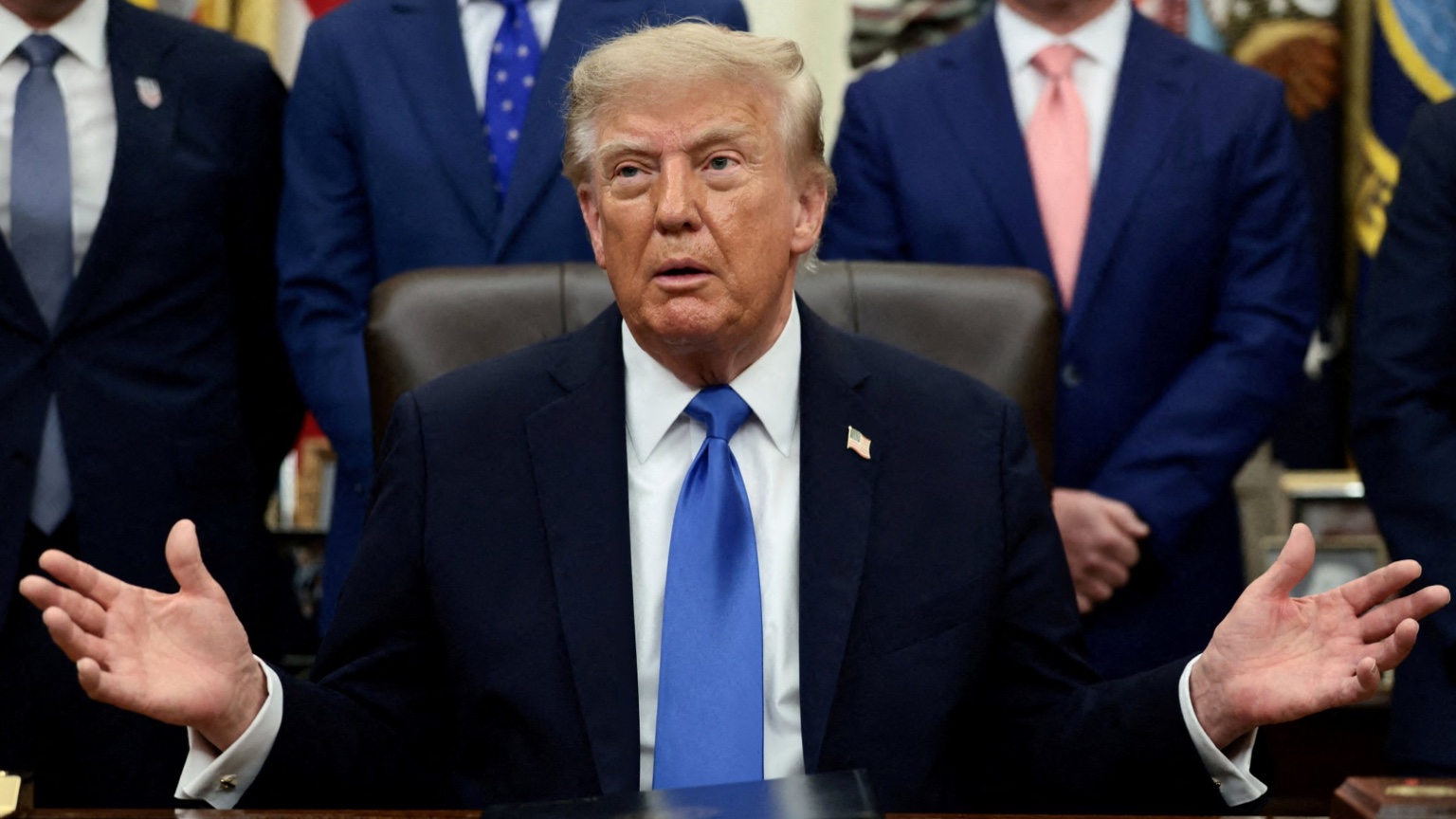
Trump appointed the director of national intelligence to lead a new AI taskforce following the September 29 White House meeting. The voluntary agreement signed by major technology companies, which Trump has described as morally binding but not statutory, commits firms to self-police AI development. Sam Altman publicly stated that society should accept some harmful consequences of AI because of its benefits, highlighting a continuing divide with Anthropic CEO Dario Amodei over how much risk is acceptable. Republican senators expressed skepticism toward AI safety warnings from technology leaders, describing them as potential fearmongering, while Congressional action on binding AI legislation remains unlikely in the near term.
Key points
- Trump created a new AI taskforce led by the director of national intelligence
- The White House AI agreement is voluntary and described by Trump as morally binding rather than statutory
- Sam Altman said society should accept some bad outcomes from AI due to its benefits
- Republican senators voiced skepticism toward AI safety warnings from industry figures
- The Pentagon stopped using Anthropic tools after the company resisted mass surveillance and autonomous weapons applications
How it unfolded
- New
A resignation and a warning go viral
Jacob Coxon resigns and publishes a warning about existential AI risk, which spreads widely over the following days.
- New
The industry raises the alarm
Dario Amodei publishes his AI safety essay. Sam Altman and Elon Musk endorse calls for greater caution, putting three of the most prominent figures in the industry on the same side of the argument.
- New
Trump calls the warnings a hoax
Multiple Truth Social posts describe AI safety fears as a “HOAX” and a “SICK conspiracy,” and argue that slowing development would benefit China.
Show 6 more eventsHide earlier events
- New
The message is amplified
The White House rapid-response account pushes the message onto X while Trump calls into the All-In Summit, moving the argument from the president's own platform into the general information environment within hours.
- ChangedContested
The story splits into competing frames
Coverage divides along presidential responsibility, innovation versus regulation, the US–China AI race, and the case for guardrails — the same events read four different ways.
- New
Trump advisers meet with Anthropic executive
Trump advisers held a meeting with Dario Amodei over AI safety, following the president's public rejection of safety warnings.
- New
White House AI agreement announced
Trump announced that he and tech leaders signed an AI agreement at a White House lunch, though the substance of the agreement was not disclosed.
- New
Amodei continues to voice safety concerns
After the White House meeting, Amodei said AI risk concerns persist and that rules to address those risks remained under discussion.
- New
Trump creates AI taskforce led by intelligence director
Trump appointed the director of national intelligence to lead a new AI taskforce, described as a Super Intelligence Force.
- New
Altman says society should accept some AI harms
Sam Altman publicly stated that the world should accept some negative consequences of AI because of its benefits, highlighting disagreement with Amodei's more cautious approach.
- New
Republican senators express skepticism toward safety warnings
GOP senators voiced skepticism toward AI safety warnings from Bill Gates, Amodei, and Altman, describing them as potential fearmongering.
- New
Pentagon stops using Anthropic tools
The Pentagon ceased using Anthropic's AI tools after the company resisted applications involving mass surveillance and autonomous weapons.
Claim tracker
8 confirmed · 2 contested · 3 unverified
- Contested
Existing US laws are sufficient to handle serious AI misuse.
- Contested
AI regulation would primarily benefit China.
- Unverified
AI safety advocacy is a coordinated political conspiracy.
- Unverified
Rogue AI agents could take over the internet within 6–12 months.
- Unverified
The Pentagon stopped using Anthropic's AI tools after the company resisted mass surveillance and autonomous weapons applications.
Reported by one outlet (AOL/BBC); not independently confirmed by other sources in this batch.
Show 8 more claimsShow fewer claims
- Confirmed
Trump publicly called AI safety fears a "hoax" and a conspiracy.
- Confirmed
Major AI-industry figures have recently called for stronger safety measures or slower development.
- Confirmed
Trump advisers met with Anthropic CEO Dario Amodei over AI safety.
- Confirmed
An AI agreement was signed at a White House lunch on September 29.
- Confirmed
The White House AI agreement is voluntary and morally binding, not statutory.
5 agreeing - Confirmed
Trump appointed the director of national intelligence to lead a new AI taskforce.
3 agreeing - Confirmed
Sam Altman said society should accept some harmful consequences of AI because of its benefits.
4 agreeing - Confirmed
Congress is unlikely to enact binding AI legislation soon.
2 agreeing
What we still don't know
- What specific powers and responsibilities does the new AI taskforce have.
- Which companies signed the voluntary White House AI agreement and what exactly they committed to.
- Whether the voluntary agreement includes any enforcement mechanisms or reporting requirements.
- What specific rules or regulatory measures Amodei and other AI safety advocates continue to propose.
- Whether the Pentagon's decision to stop using Anthropic tools reflects broader policy or a specific disagreement.
- How the voluntary White House accord differs substantively from previous industry commitments.
- Whether any Democratic lawmakers support binding AI regulation and if bipartisan legislation is possible.
- What evidence supports Republican senators' characterization of AI warnings as fearmongering.
- Whether the administration's position on AI safety has changed since Trump's September "hoax" statements, or whether the voluntary accord represents continuity with opposition to statutory regulation.
AI safety becomes a political fight
Sources analysed
8 outlets in the analysed roster.
- Fortune — Sam Altman says the world should accept some 'bad things' for AI benefits
- Disruption Banking — Anthropic Filed the Most Alarming Risk Disclosure in IPO History—Nothing in It Is Binding
- Ground News — Trump says top tech firms have signed accord to ‘self-police’ AI development
- AOL — Pentagon stops using Anthropic AI tools after blacklisting company, BBC told
- Yahoo News — AI Boss Makes Terrifying Proclamation
- BBC — Trump chooses top spy boss to run new AI taskforce
- Fox News — WATCH: GOP senators skeptical of Bill Gates’ ‘fearmongering’ AI warning as Dems sound alarm
- Politico — Sam Altman, Decoded