Nepal floods
A glacier collapse near the Nepal–Tibet border triggered a catastrophic flash flood. Hundreds are dead, more than 1,300 are missing, and authorities are warning of a second flood.
Quick summary
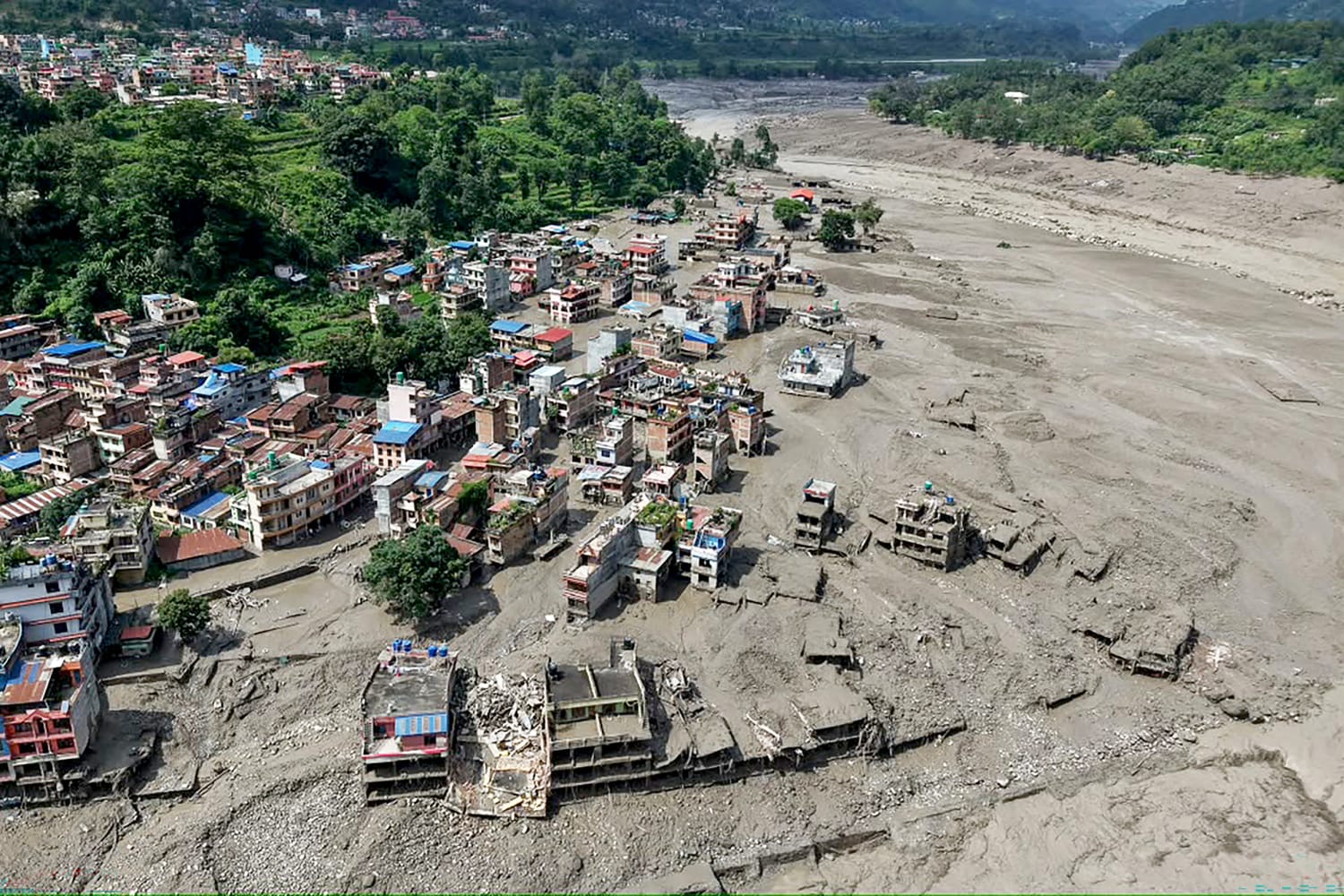
A catastrophic flash flood struck Nepal on August 26 after a glacier collapse and ice-rock avalanche near the Nepal–Tibet border. Hundreds have been reported dead, more than 1,300 people are missing, and major hydropower infrastructure has been damaged. Authorities are now warning of a possible second flood as heavy rain continues.
Key points
- At least 353 deaths have been reported in Nepal.
- More than 1,300 people are missing, including over 700 foreign nationals.
- Six major hydropower and transmission facilities were damaged.
- Around 430 MW of electricity generation has been disrupted.
- A newly formed landslide lake and continuing rainfall create a risk of another flood.
How it unfolded
- New
Flood begins
A glacier collapse and ice-rock avalanche trigger a major surge through the Bhotekoshi river system.
- New
Infrastructure hit
Roads, hydropower plants and transmission facilities suffer major damage.
- ChangedContested
Reported casualty numbers rise sharply
Figures moved from 8 to more than 350 within 24 hours as information reached authorities from areas cut off by communication outages.
- New
More than 1,300 people reported missing
The scale of the missing-person count prompts international rescue efforts.
- New
Warning of a second flood
Authorities warn that a landslide-created lake combined with further rainfall could produce a secondary disaster.
Claim tracker
2 confirmed · 1 contested · 2 unverified
- ConfirmedKey claim
A glacial collapse triggered the flood.
- ContestedKey claim
At least 353 people have died and more than 1,300 are missing.
Death and missing-person figures remain unstable. Reported deaths moved from 8 to more than 350 within 24 hours, and counts are still being revised as cut-off areas are reached.
- Confirmed
Major hydropower and transmission infrastructure was damaged.
- Unverified
Casualties and conditions on the Tibet side of the border are as reported.
Limited verification: information about the Tibet side currently depends heavily on Chinese state sources, with no independent corroboration available.
- Unverified
Climate change caused this specific flood.
Not yet established. The glacial trigger and the long-term loss of Himalayan glaciers are documented, but event-level climate attribution is a separate question and has not been done for this flood.
Coverage analysis
How different outlets framed the same event, and where their accounts agree and diverge — as it stood when this brief was published.
BBC, CNN and other international outlets emphasise the human tragedy, particularly the missing and the foreign tourists among them.
Nepali outlets focus more heavily on damaged infrastructure, electricity generation and the domestic consequences.
Science and climate-focused outlets emphasise glacial instability and climate change.
South Asian outlets give greater attention to missing nationals, cross-border effects and the risks to India.
The underlying Newjee analysis identifies this divergence explicitly: humanitarian framing versus climate responsibility is one of the central framing conflicts in the coverage.
What we still don't know
- The final number of deaths and missing people.
- The full extent of damage in remote areas that have not yet been reached.
- Whether the newly formed lake will trigger another flood.
- How much climate change contributed to this specific event, as distinct from the broader increase in Himalayan glacial risk.